

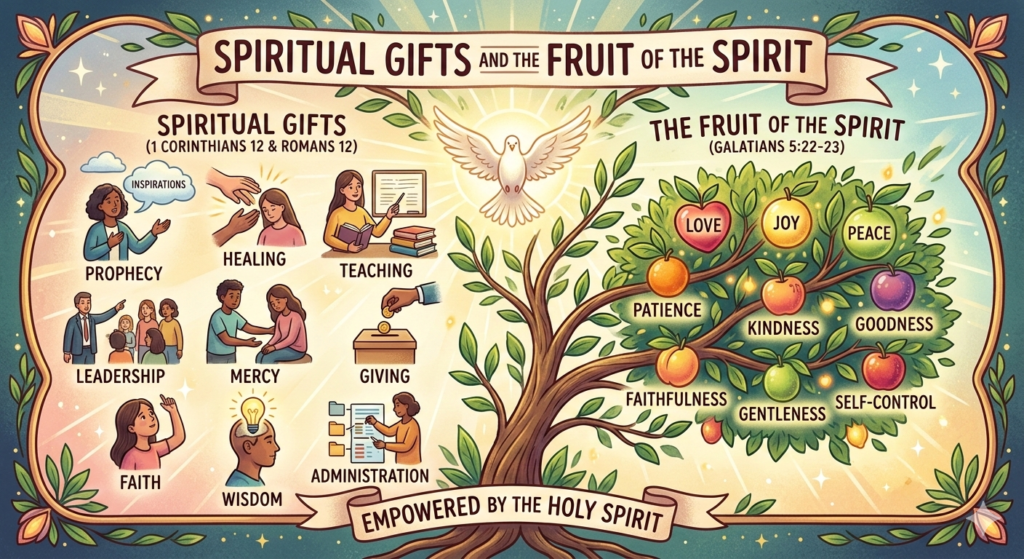
Spiritual Gifts and the Fruit of the Spirit
Understanding Their Differences, Importance, and Balance in Christian Life
Introduction
In the Christian life, the work of the Holy Spirit is revealed in two major ways: spiritual gifts and the fruit of the Spirit. Both are essential for the growth of believers and the effectiveness of the church. While spiritual gifts empower believers to serve in supernatural ways, the fruit of the Spirit shapes the believer’s character to reflect the nature of Christ.
Many ministries emphasize one more than the other. Some focus strongly on supernatural manifestations, while others emphasize moral character and spiritual maturity. However, the biblical pattern shows that God intends believers to develop both spiritual gifts and spiritual fruit in their lives.
Spiritual Gifts: Supernatural Abilities for Ministry
Spiritual gifts are supernatural abilities given by the Holy Spirit to believers to equip them for service and for the edification of the church.
The Bible teaches that these gifts are distributed by the Holy Spirit to every believer for the benefit of the body of Christ. They enable Christians to minister beyond their natural abilities and demonstrate the power of God.
Scriptural References
- 1 Corinthians 12:4–7 – There are different kinds of gifts, but the same Spirit distributes them.
- Ephesians 4:11–12 – Gifts are given to equip believers for ministry and to build up the church.
- Romans 12:6–8 – Believers are encouraged to use their gifts faithfully.
Examples of spiritual gifts include prophecy, teaching, healing, miracles, discernment, and speaking in tongues.
A clear biblical example can be seen in the ministry of Peter the Apostle, who healed a lame man through the power of God (see Acts 3:1–8). Likewise, Paul the Apostle demonstrated extraordinary miracles during his ministry (Acts 19:11–12). These examples show how spiritual gifts enable believers to advance God’s work in powerful ways.
The Fruit of the Spirit: The Character of Christ in the Believer
While spiritual gifts focus on what believers can do, the fruit of the Spirit focuses on who believers become through the transforming work of the Holy Spirit.
The fruit of the Spirit refers to the Christlike qualities that develop in a believer’s life as they grow in their relationship with God. These qualities include love, joy, peace, patience, kindness, goodness, faithfulness, gentleness, and self-control.
Scriptural References
- Galatians 5:22–23 – The fruit of the Spirit is listed as the evidence of a Spirit-filled life.
- John 15:4–5 – Jesus teaches that believers must remain in Him in order to bear fruit.
- Colossians 3:12–14 – Believers are encouraged to clothe themselves with compassion, humility, patience, and love.
The perfect example of spiritual fruit is found in the life of Jesus Christ, who demonstrated love, humility, patience, and compassion in every aspect of His ministry (Matthew 11:29; John 13:34).
The Major Difference Between Spiritual Gifts and Spiritual Fruit
Although both come from the Holy Spirit, spiritual gifts and spiritual fruit serve different purposes.
Spiritual gifts are abilities given for ministry, while spiritual fruit represents character developed through spiritual growth. Gifts reveal the power of God working through believers, while fruit reveals the character of Christ formed within believers.
Another important difference is that spiritual gifts can sometimes operate even in believers who are spiritually immature. However, the fruit of the Spirit develops gradually as believers mature in their faith.
The apostle Paul the Apostle highlighted this truth by explaining that even the most powerful spiritual gifts are meaningless without love (see 1 Corinthians 13:1–3).
Five Major Reasons Both Spiritual Gifts and Fruit Are Needed
1. They Reveal Both the Power and Character of God
God desires His people to display both His power and His nature. Spiritual gifts demonstrate God’s supernatural power, while the fruit of the Spirit reveals His character.
The ministry of Jesus Christ perfectly reflected this balance as He healed the sick and performed miracles while also demonstrating compassion and humility (Luke 4:36; Matthew 11:29).
2. They Build and Strengthen the Church
Spiritual gifts help believers serve one another and contribute to the growth of the church. At the same time, the fruit of the Spirit fosters unity, love, and healthy relationships among believers.
Scriptural Reference
- Ephesians 4:13 – The goal of ministry is spiritual maturity and unity in the body of Christ.
3. They Provide a Complete Witness to the World
The world is impacted when believers demonstrate both the power of God and the character of Christ. Miracles and spiritual gifts may draw people to the gospel, but the fruit of the Spirit sustains the credibility of the Christian message.
Scriptural Reference
- Matthew 5:16 – Believers are called to let their light shine before others.
4. They Protect Believers from Spiritual Pride
When believers operate in powerful spiritual gifts without developing humility and love, pride can easily arise. The fruit of the Spirit helps maintain spiritual balance and keeps believers focused on serving others.
Scriptural Reference
- 1 Corinthians 8:1 – Knowledge and ability can lead to pride, but love builds up others.
5. They Enable the Church to Fulfill Its Mission
The church’s mission requires both spiritual empowerment and godly character. Spiritual gifts equip believers to carry out ministry effectively, while the fruit of the Spirit ensures that their lives reflect the message they preach.
Scriptural Reference
- Acts 1:8 – Believers receive power from the Holy Spirit to be witnesses.
The Need for Balance Between Spiritual Gifts and Fruit
For believers to grow into spiritual maturity, there must be a balance between spiritual gifts and spiritual fruit. A balanced Christian life combines supernatural ministry with Christlike character.
Jesus taught that believers are known by their fruit (see Matthew 7:16), while the early church also demonstrated powerful spiritual gifts (Acts 2:43). These examples show that the Christian life involves both spiritual transformation and spiritual empowerment.
Consequences of Failing to Balance Gifts and Fruit
Spiritual Gifts Without Fruit
When spiritual gifts operate without spiritual fruit, ministries can experience pride, division, and moral failure. The church in Corinth possessed many spiritual gifts but struggled with immaturity and conflict (see 1 Corinthians 3:1–3).
Fruit Without Spiritual Gifts
Believers who focus only on character development but neglect spiritual gifts may lack the spiritual power necessary to fulfill God’s mission. The early church relied on the empowerment of the Holy Spirit to spread the gospel effectively (Acts 4:31).
Damage to Christian Witness
Operating in spiritual gifts without Christlike character can damage the credibility of Christian ministry. Jesus warned that some people may perform miracles yet still lack a true relationship with Him (see Matthew 7:22–23).
Conclusion
Spiritual gifts and the fruit of the Spirit are both vital components of the Christian life. Spiritual gifts empower believers to serve effectively in ministry, while the fruit of the Spirit transforms believers to reflect the character of Jesus Christ.
When both are present, the church becomes spiritually powerful and morally credible. Believers who develop both the gifts of the Spirit and the fruit of the Spirit will become mature instruments through whom God can accomplish His purposes in the world.